

A single illustration reveals the entirety of cosmic history
After a period of cosmic inflation came to an end, the hot Big Bang commenced. 13.8 billion years later, we arrived.


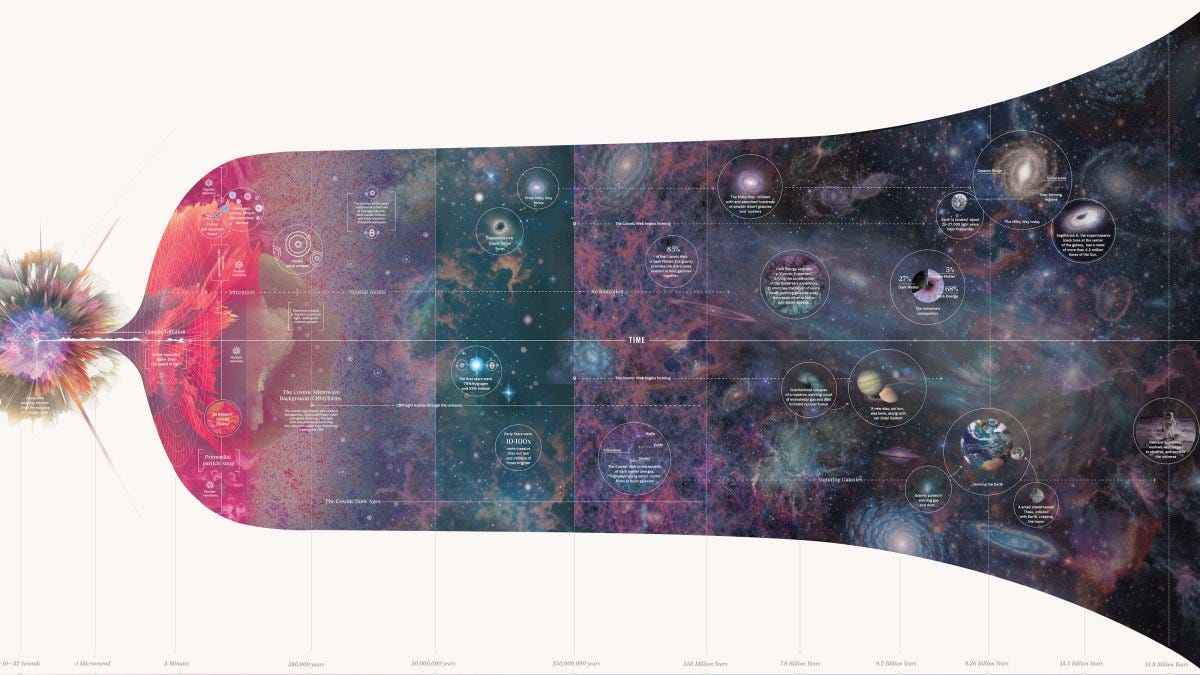
I am pleased to share a new Big Think project that I got to help one of our incredible creative artists create: a new poster showcasing the history of our Universe. It’s now available for purchase with museum-quality printing in the Big Think store! As always, the Universe is yours to enjoy and explore, and next week I’ll be at the American Astronomical Society’s big summer meeting to help bring you all the latest!
All the best,
Ethan
After a period of cosmic inflation came to an end, the hot Big Bang commenced. 13.8 billion years later, we arrived. Here’s how we got here.
Our observable Universe has evolved tremendously since its inception.
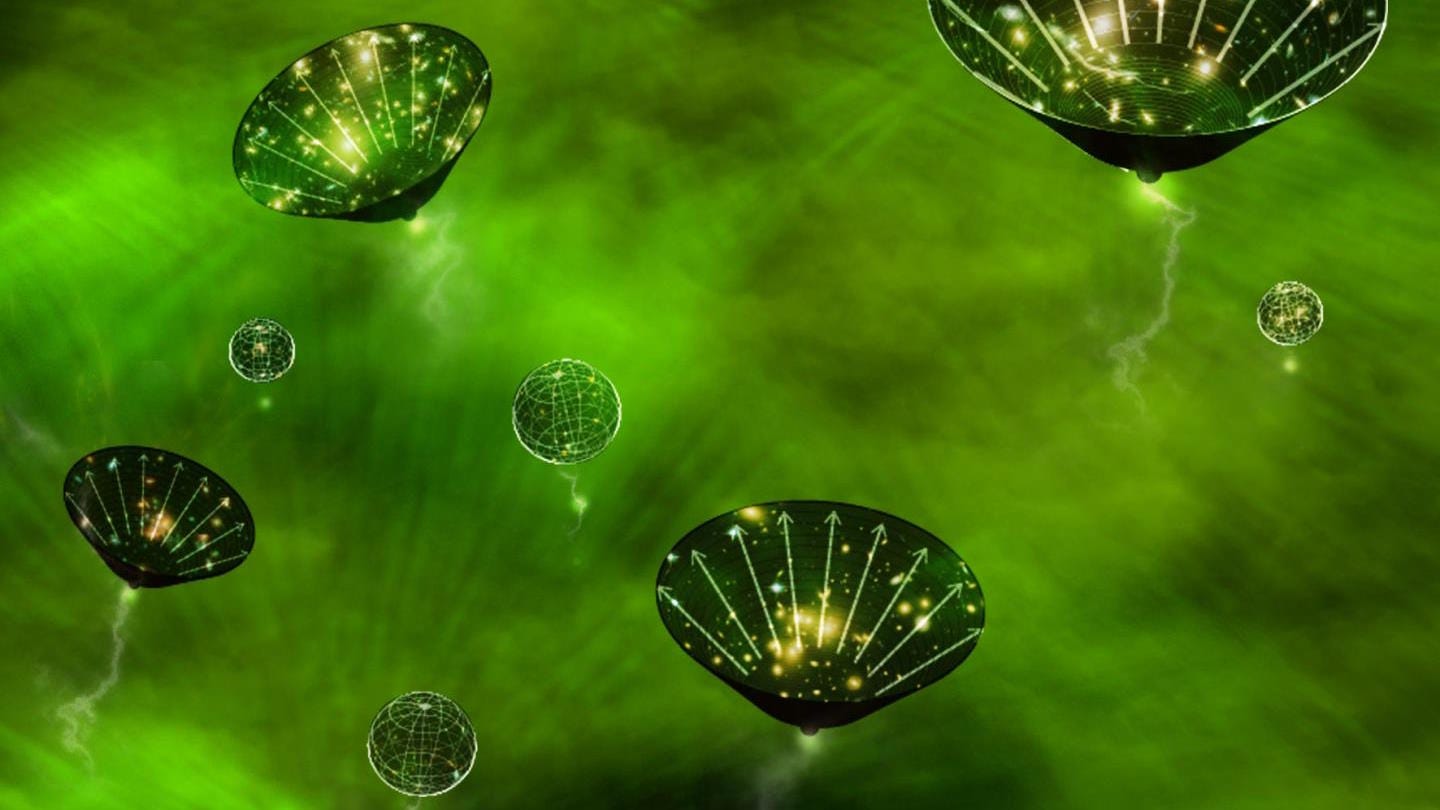
During cosmological inflation, the space contained in the inflationary region grows exponentially, doubling in all three dimensions with each tiny fraction-of-a-second that passes. Where inflation ends, a hot Big Bang ensues. But due to quantum effects, each region where a Big Bang occurs will be surrounded by more inflating, exponentially expanding space, ensuring that no two regions where hot Big Bangs occur ever collide, intersect, or overlap.
Growing from a minuscule past, its history covers 13.8 billion years.
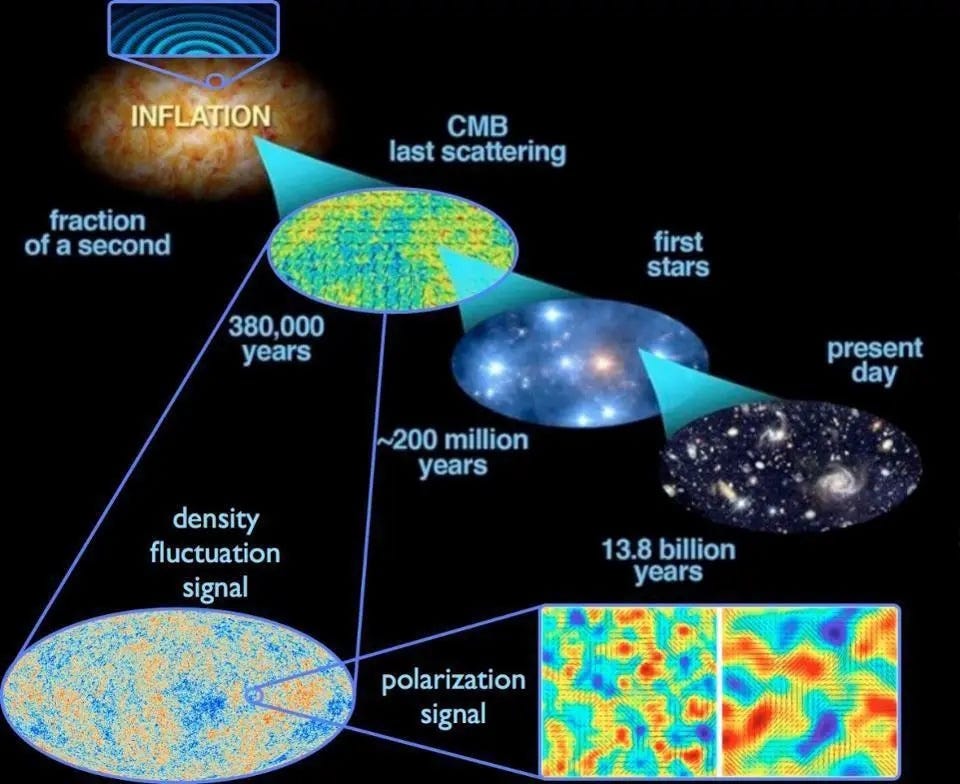
The quantum fluctuations inherent to space, stretched across the Universe during cosmic inflation, gave rise to the density fluctuations imprinted in the cosmic microwave background, which in turn gave rise to the stars, galaxies, and other large-scale structures in the Universe today. This is the best picture we have of how the entire Universe behaves, where inflation precedes and sets up the Big Bang. Unfortunately, we can only access the information contained inside our cosmic horizon, which is all part of the same fraction of one region where inflation ended some 13.8 billion years ago.
Across space and time, many epochs and milestones have unfolded.
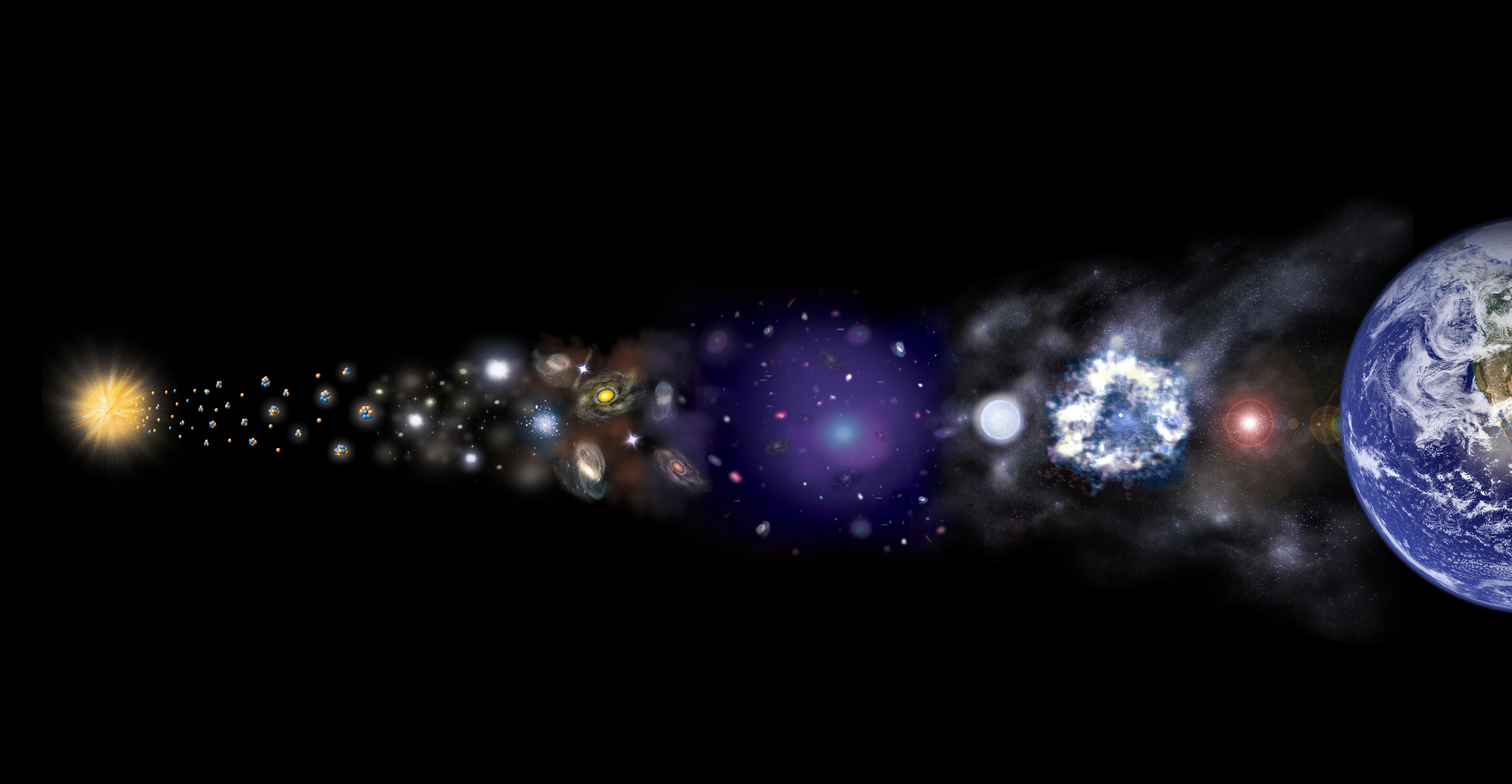
Our Universe, from the hot Big Bang until the present day, underwent a huge amount of growth and evolution, and continues to do so. Our entire observable Universe was approximately the size of a modest boulder some 13.8 billion years ago, but has expanded to be ~46 billion light-years in radius today. The complex structure that has arisen must have grown from seed imperfections of at least ~0.003% of the average density early on, and has gone through phases where atomic nuclei, neutral atoms, and stars first formed.
The earliest phase we’re certain of is cosmic inflation: an energetic, supremely fast expansion period.
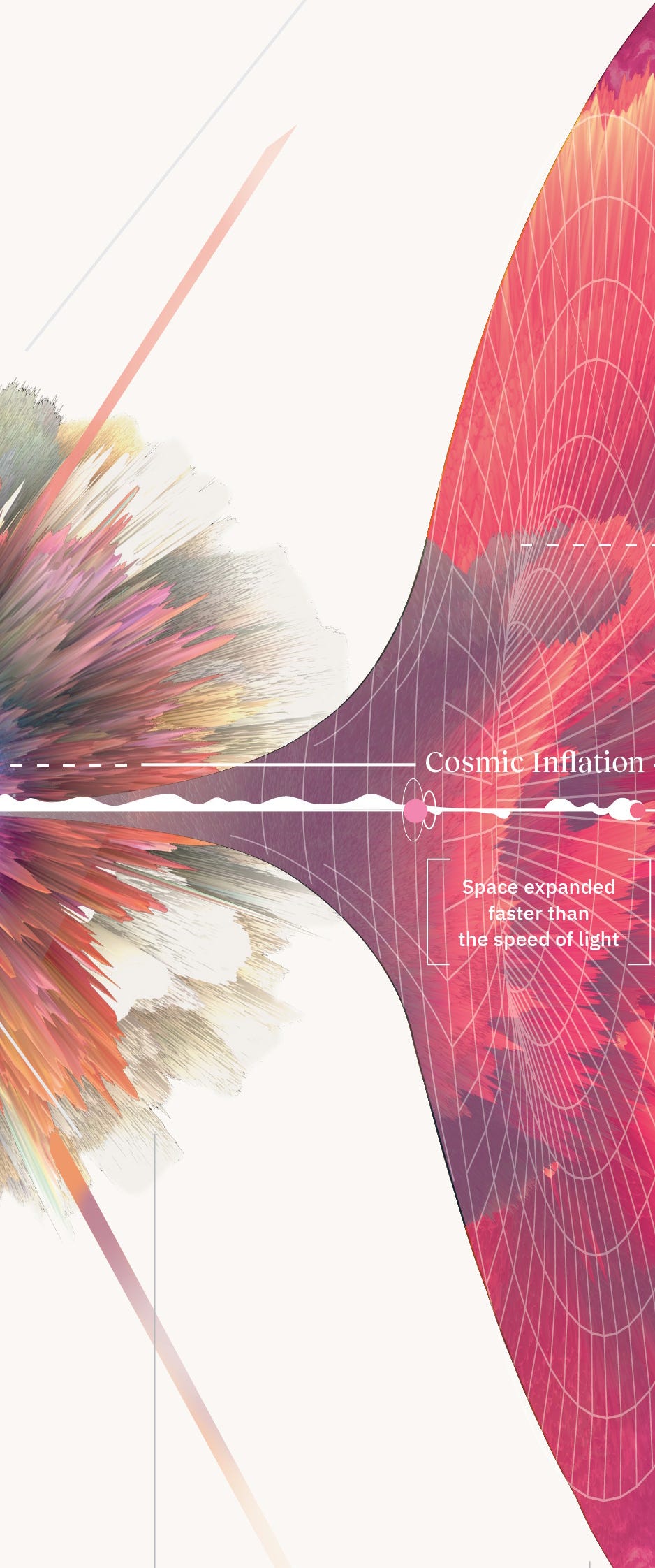
Although we lack the information necessary to draw any conclusions at all about whatever prior state gave rise to cosmic inflation, we know that inflation was a rapid, relentless process that caused the size of the Universe to double and redouble again in every tiny fraction-of-a-second that elapsed, stretching what was initially a subatomically small region to greater than the observable Universe on incredibly short timescales.
That sets up the hot Big Bang: a dense soup of particles and antiparticles.
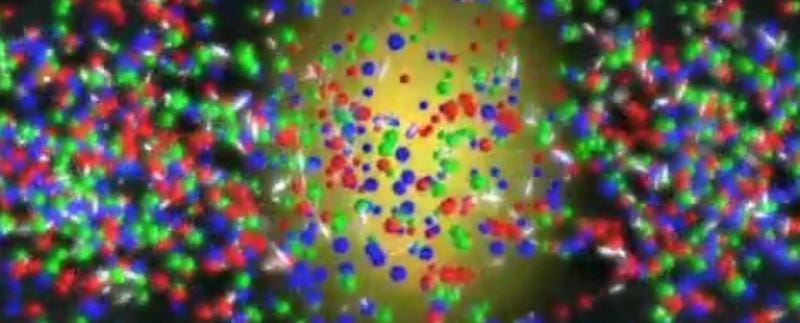
In the earliest stages of the hot Big Bang, there were no bound structures that could form, only a “primordial soup” of matter particles, antimatter particles, and bosons like the photon. This hot, dense, and rapidly expanding state represents the most extreme conditions ever achieved in the Universe, but they were fleeting: the Universe quickly cools off.
We swiftly formed baryons, then atomic nuclei, and soon after, neutral atoms.
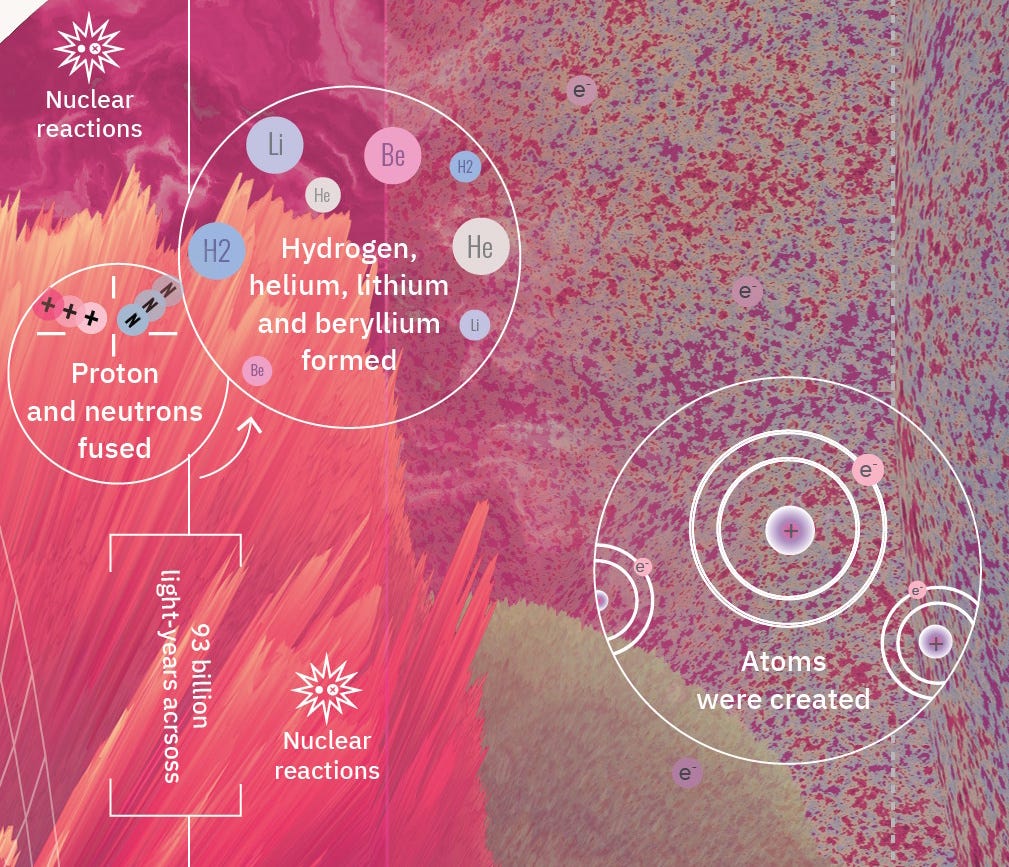
Over the first fraction of a second after the Big Bang, particles and antiparticles annihilate, unstable remnant species decay away, and quarks confine into hadrons. Over the next few minutes, protons and neutrons interconvert and fuse together, giving rise to the light atomic nuclei. It’s only after 380,000 years have elapsed that neutral atoms can form, however all of that represents just the first 0.0028% of cosmic history.
Once atoms stably form, gravitation begins slowly growing cosmic structures.
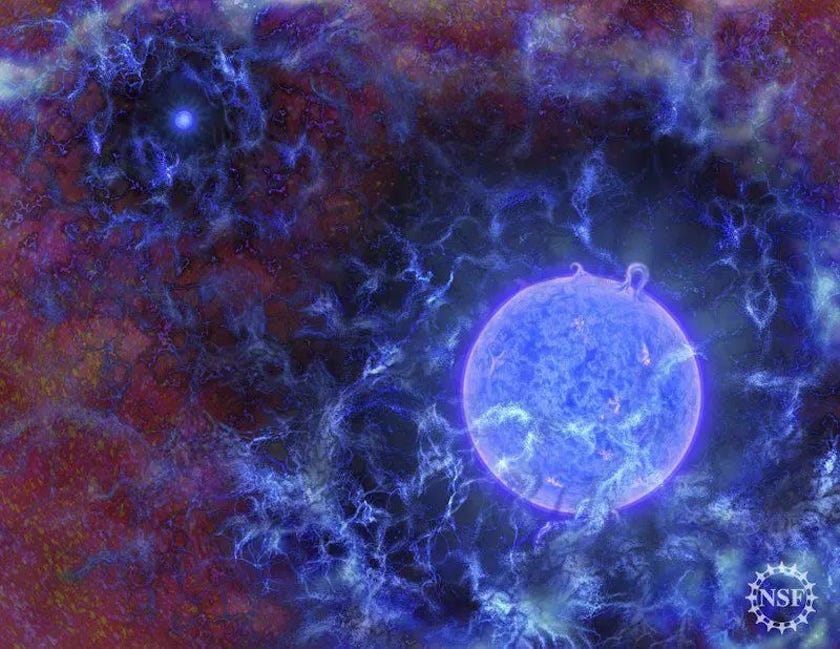
This illustration shows an example of one of the first stars in the Universe, turning on and shining brilliantly while surrounded by a cocoon of neutral gas. Without metals to cool them down or radiate energy away, only large-mass clumps in the heaviest-mass regions can form stars. The very first stars of all likely formed when the Universe was just 30-to-100 million years of age, or between a redshift of around 30-to-70. For comparison, JWST has only seen back to 285 million years after the Big Bang, or a redshift of 14.
The first stars form, illuminating and eventually reionizing the depths of space.
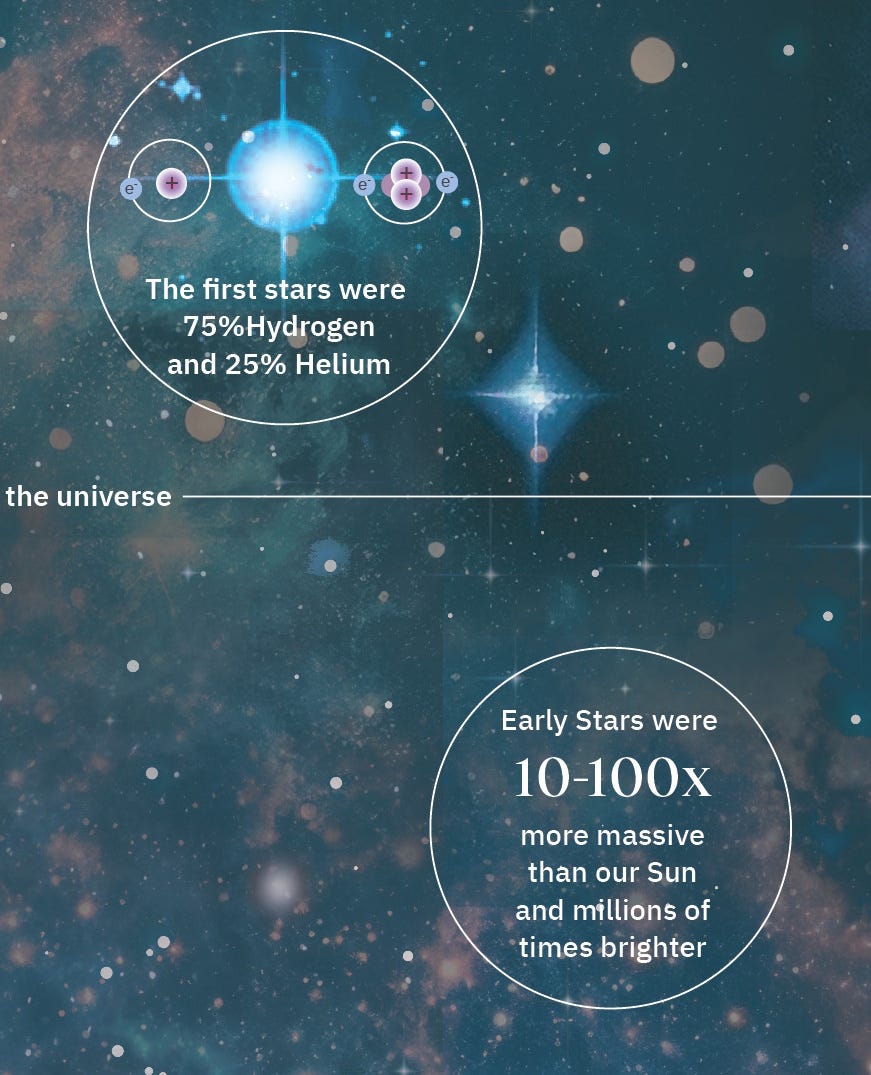
This portion of an illustrated history of the Universe poster details the composition of the first stars and shows them shining through the darkness for the first time. As the ultraviolet light generated by the star streams away from it, those photons strike neutral atoms in the intergalactic medium, reionizing them and making the Universe transparent to starlight.
Galaxies — great collections of stars — grow by accreting matter and merging together.
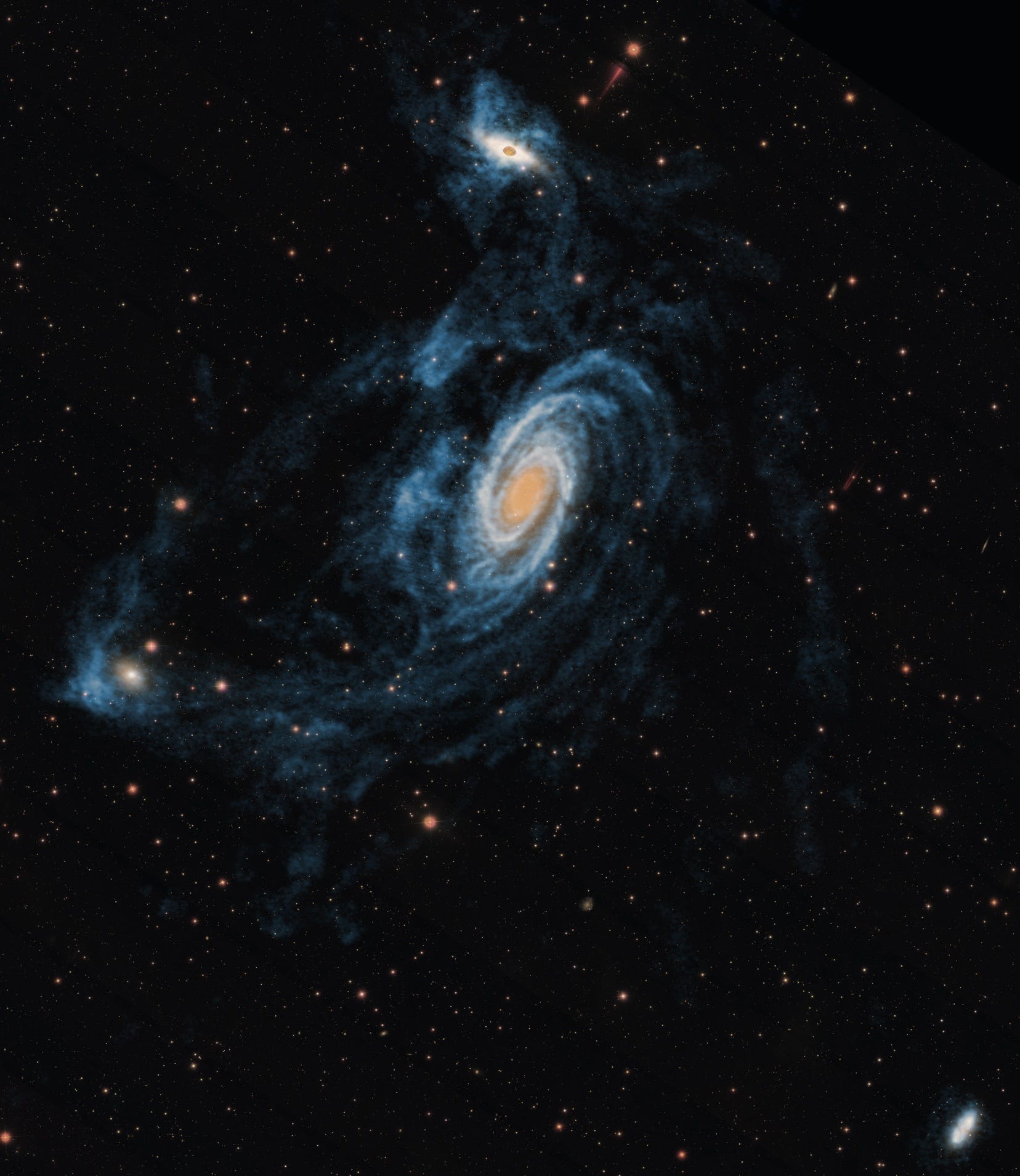
The M81 triplet, consisting of M81 (right-center), M82 (top) and NGC 3077 (left) are all connected by a vast bridge of neutral hydrogen. Gas infall, star formation, and gravitational tidal effects are all related, with the strength of tidal forces increasing much more rapidly with shorter distances than even the gravitational force. Eventually, all three of these galaxies should merge.
The dominant form of cosmic mass is dark matter, not atom-based normal matter.

This snippet from a structure-formation simulation, with the expansion of the Universe scaled out, represents billions of years of gravitational growth in a dark matter-rich Universe. Over time, overdense clumps of matter grow richer and more massive, growing into galaxies, groups, and clusters of galaxies, while the less dense regions than average preferentially give up their matter to the denser surrounding areas. The “void” regions between the bound structures continue to expand, but the structures themselves, once they become bound in any fashion, do not.
Its gravity forms galactic groups and clusters, and later, a filamentary cosmic web.
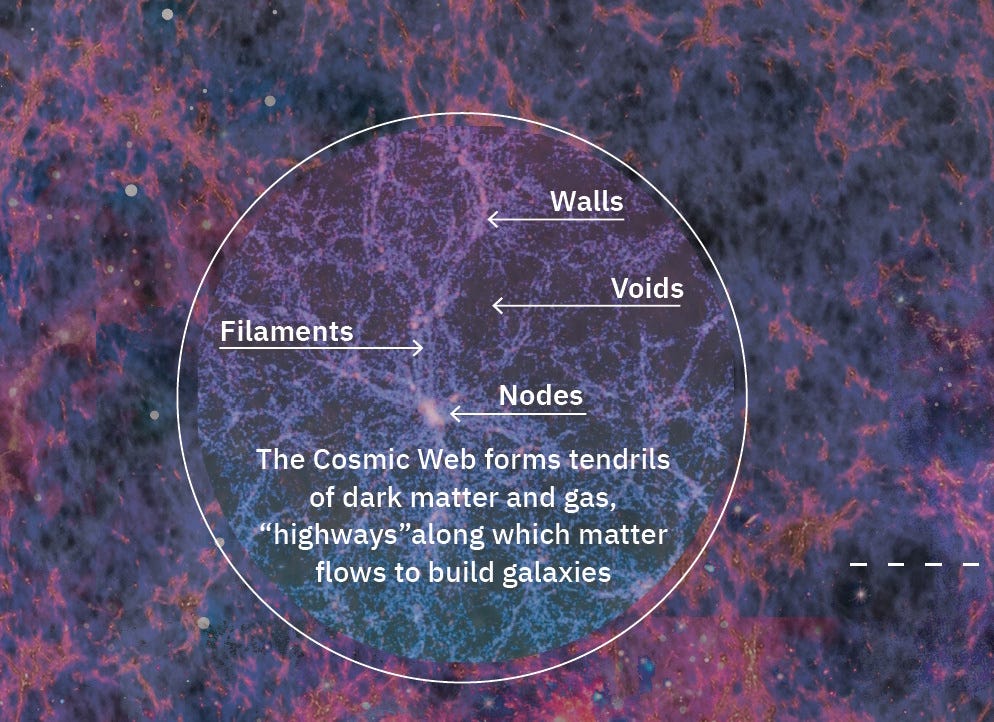
Gravitation, time, and matter (mostly dark matter, but also some normal matter) drive the formation of structure on the largest cosmic scales across the Universe. The presence of these ingredients leads to the effects of forming galaxies, galaxy groups and clusters, and the large-scale filamentary network of the cosmic web. We often say that dark matter forms the “backbone” of the cosmic web, where this illustration is completely consistent with that idea.
After billions of years evolving, our Milky Way becomes recognizable.
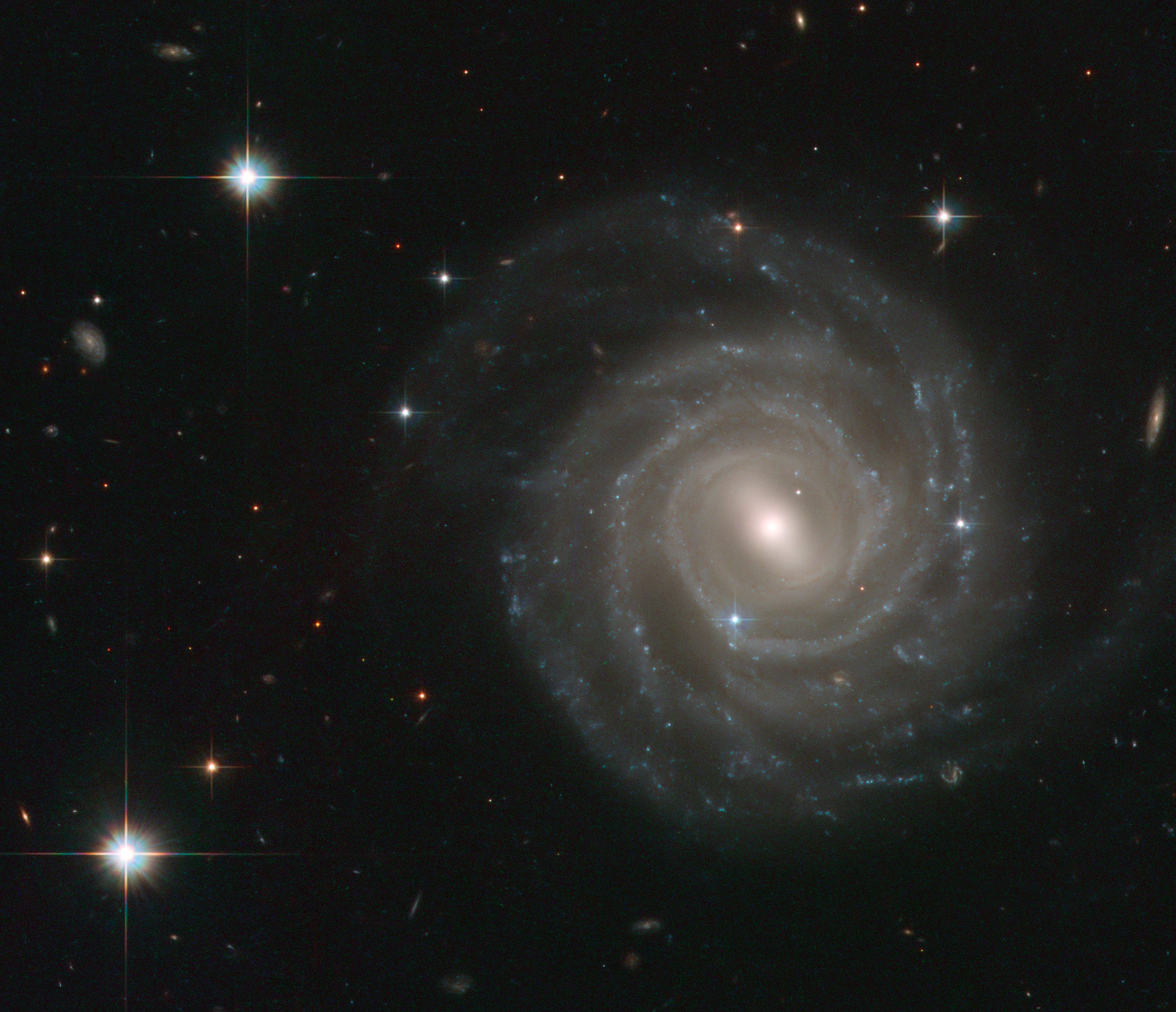
The spiral galaxy UGC 12158, with its arms, bar, and spurs, as well as its low, quiet rate of star formation and hint of a central bulge, may be the single most analogous galaxy for our Milky Way yet discovered. It is neither gravitationally interacting nor merging with any nearby neighbor galaxies, and so the star-formation occurring inside is driven primarily by the density waves occurring within the spiral arms in the galactic disk.
Within it, a familiar star and stellar system form: our cosmic home.
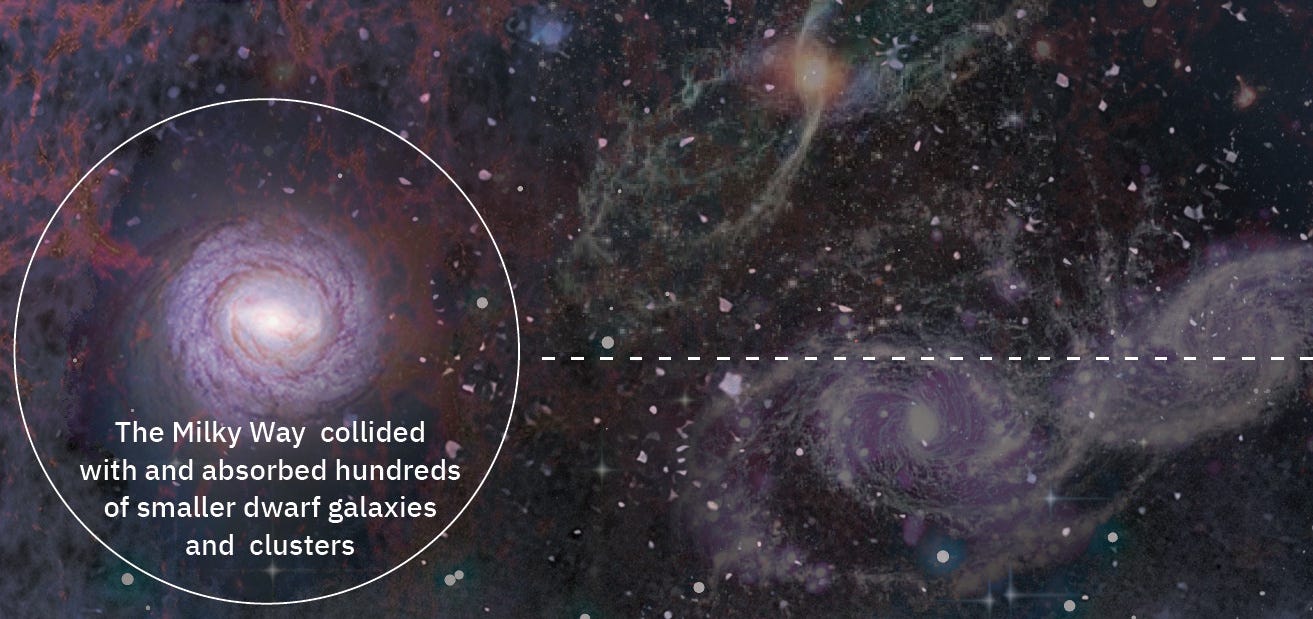
As just one object forming along a filament in the cosmic web, the Milky Way is not necessarily cosmically remarkable, but rather is remarkable to us because we arose within it. The story of galaxies infalling into it, merging with it, and helping it grow up is a story that unfolds for hundreds of billions (or more) of Milky Way-like galaxies throughout the Universe.
Meanwhile, dark energy rises to cosmic prominence, accelerating unbound cosmic objects away.
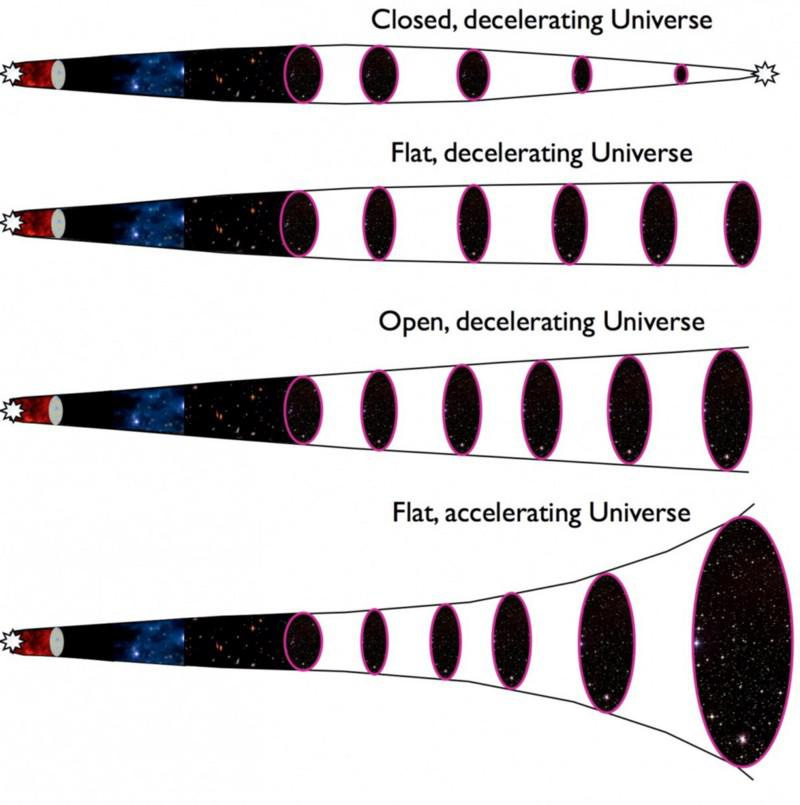
The expected fates of the Universe (top three illustrations) all correspond to a Universe where the matter and energy combined fight against the initial expansion rate. In our observed Universe, a cosmic acceleration is caused by some type of dark energy, which is hitherto unexplained. All of these Universes are governed by the Friedmann equations, which relate the expansion of the Universe to the various types of matter and energy present within it.
4.5 billion years after Earth’s formation, an intelligent, technologically advanced species arises upon it.
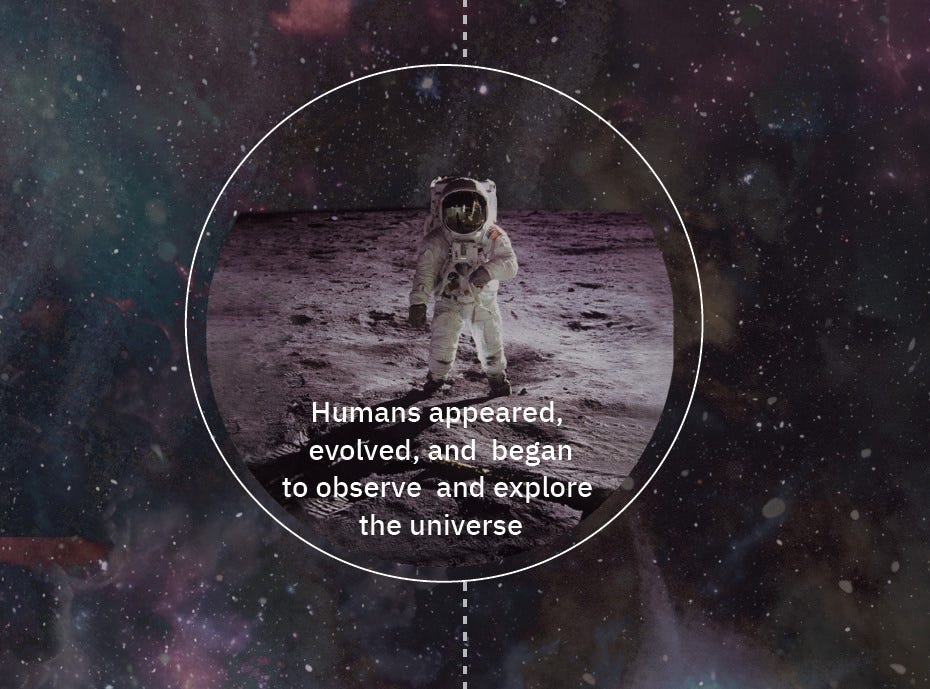
Perhaps the defining moment from the space age came in 1969, when Neil Armstrong and Buzz Aldrin became the first human beings to walk on the Moon. It remains an outstanding allegory for humanity's unique potential to be the greatest force guiding our world's future — for better or for worse.
By pooling our resources and working together, we achieve great milestones.
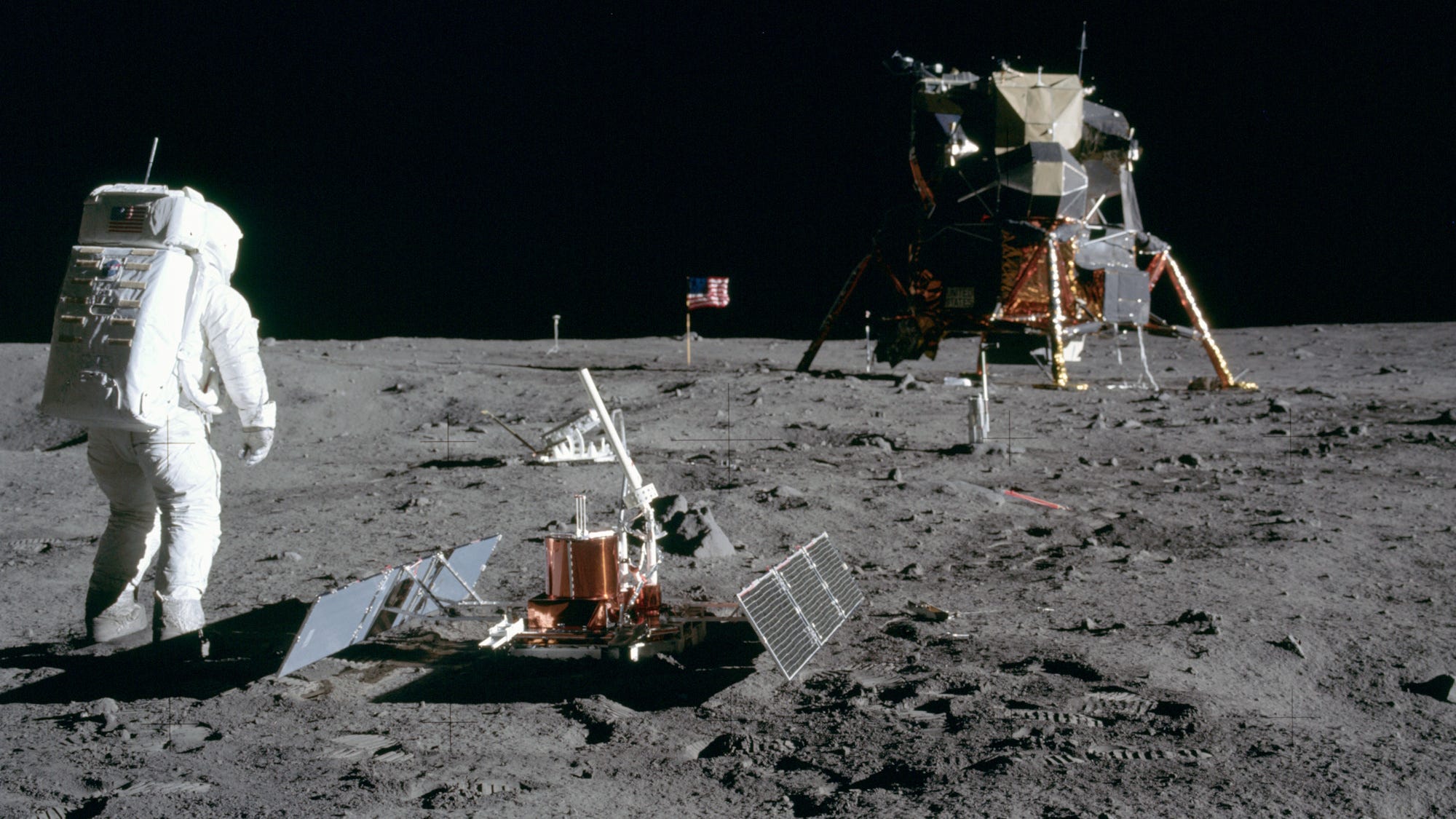
In July of 1969, humanity took our first steps on the surface of another world: the Moon. This was the crowning achievement of NASA and the space program in the 1960s, representing a global victory for science and human achievement. In 2026, it’s clear the country’s new direction will include a different set of priorities.
Remarkably, a single artistic illustration can encapsulate it all.

This poster is designed to tell the story of cosmic history from before the Big Bang up through the present day. Its unique artistry enables us to visualize the Universe in “chunks,” with each chunk representing a different dominant era within astrophysics.


I’m a sucker for timelines https://miro.com/app/board/uXjVLgNb500=/?share_link_id=365498252448
NOPE! It reveals our understanding / working model of its history.
Think big, and respect your contexts, limitations, and biases.